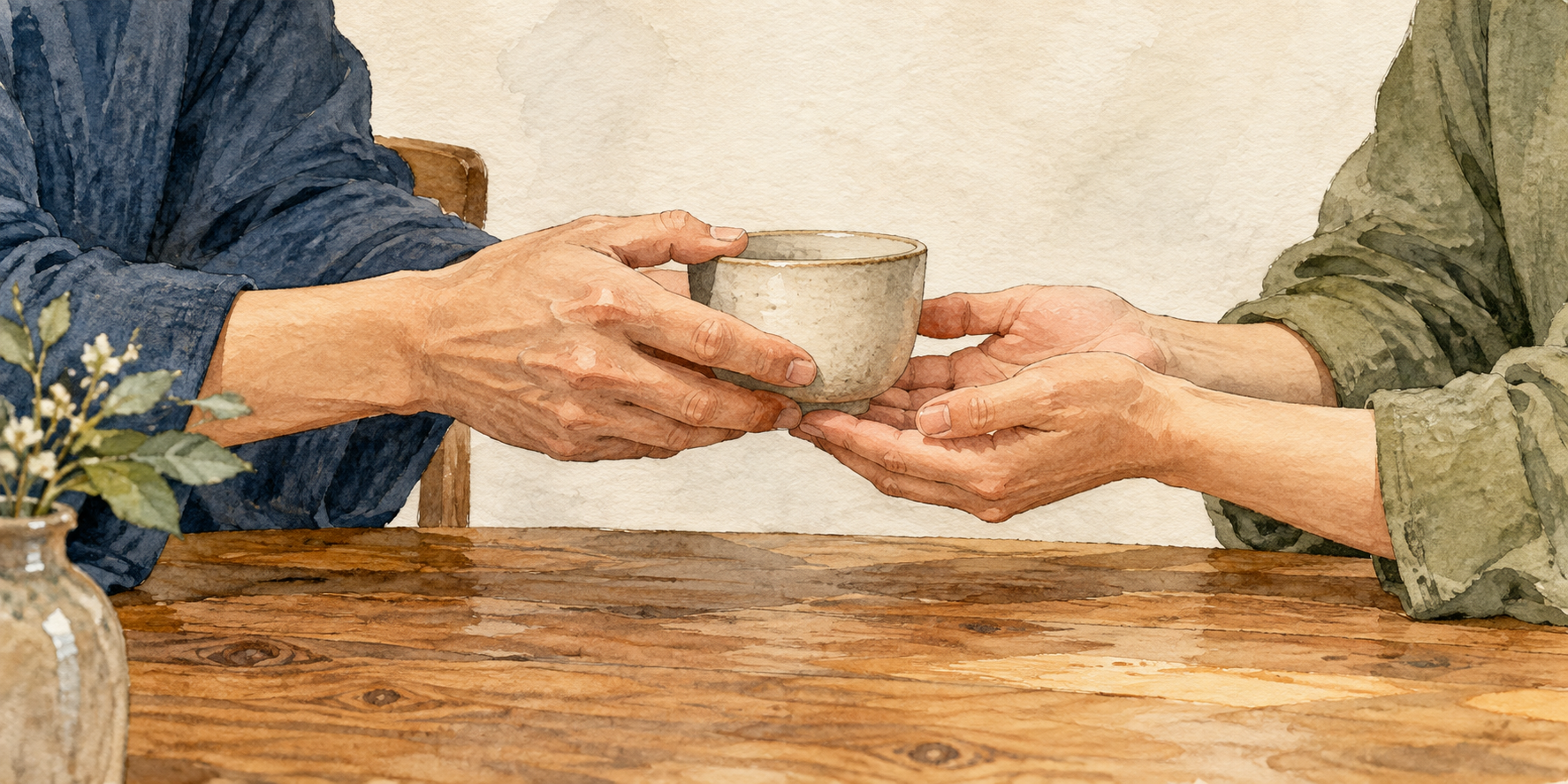
Once strength has been developed, how will it be used? The book's discussion of jin is connected with this question. Rather than judging others solely by what we can do, it asks us to notice their pain and difficulties too.
Ueoka says his view of other people changed through experiences of hardship and isolation. Understanding something gives us a reason not to blame too harshly those who do not understand it; having strength gives us a reason to protect people in weaker positions. Jin is presented not as the opposite of strength, but as something that gives its use direction.
In practice, this perspective draws attention to how we treat people with different levels of experience. A beginner's uncertainty should not be assessed only through the instincts of someone who has practiced for years. Listening to questions and checking what the learner understands is one possible expression of care. Kindness need not mean making necessary instruction vague. We can communicate what must be said without treating a person carelessly. The book connects developing ability with considering how that ability can support people around us.
強さを身につけた後、その力をどう使うか。本書の「仁」は、この問いと結びついています。自分ができることを基準に相手を責めるのでなく、相手の痛みや難しさにも目を向けます。
著者は、自分の苦しさや孤独を経験する中で、人への見方が変わったと述べています。分かっているからこそ、分からない人を責めすぎない。力があるからこそ、弱い立場の人を守る。仁は、強さと反対の性質ではなく、その使い方を方向づけるものとして描かれます。
この視点を稽古の場で考えると、経験の差がある相手への接し方が見えてきます。初めての人が戸惑うことを、長く続けた自分の感覚だけで評価しない。質問を聞き、相手がどこまで理解したかを確かめることも、その一例でしょう。もちろん、優しさは必要な指導を曖昧にすることと同じではありません。伝えるべきことを伝えながら、人を粗末にしない。技量を得ることと、その技量によって周囲を支えることを一緒に考える点に、本書の仁の特徴があります。
Source: 出典:Chapter 3, “Jin”; manuscript pp. 29-30.第三章「仁」/原稿29–30頁
About the source & images出典と画像について
These are editorial drafts based on the manuscript, for author review. They have not yet been checked against the final published edition. Page references are manuscript pages, not published-edition pages. The English text translates these editorial columns; it is not quoted from an English edition. English section titles are translations for reference, not verified official titles.原稿ベースの著者確認用編集稿です。刊行最終版との照合は未完了です。出典頁は61頁原稿の頁番号で、刊行版の頁番号ではありません。英語はこの編集コラムの翻訳であり、英語版書籍からの引用ではありません。英語の章節名は参照用の訳で、正式英語題として確認したものではありません。
Third-person editorial explanation, not first-person author testimony. Technical passages are not unsupervised practice instructions. No performance guarantees. Religious material reflects the author’s personal interpretation, not a participation requirement. Article 30 applies the manuscript to camp follow-up as an editorial proposal; the book does not describe a camp. First-time day experiences and camps for experienced overseas practitioners remain distinct.第三者による編集解説で、著者本人の一人称の証言としては書いていません。技術記事は単独練習の手順書ではなく、成果を保証しません。宗教的記述は著者個人の解釈で、参加条件ではありません。30番の合宿後への適用は書籍外の編集提案です。初心者の日帰り体験と海外経験者向け合宿を区別します。
Photographs are owner-supplied. AI illustrations are fictional contextual images, not documentary photographs or technical diagrams.写真は本人提供。AI生成イラストは架空の情景で、記録写真や技術図ではありません。