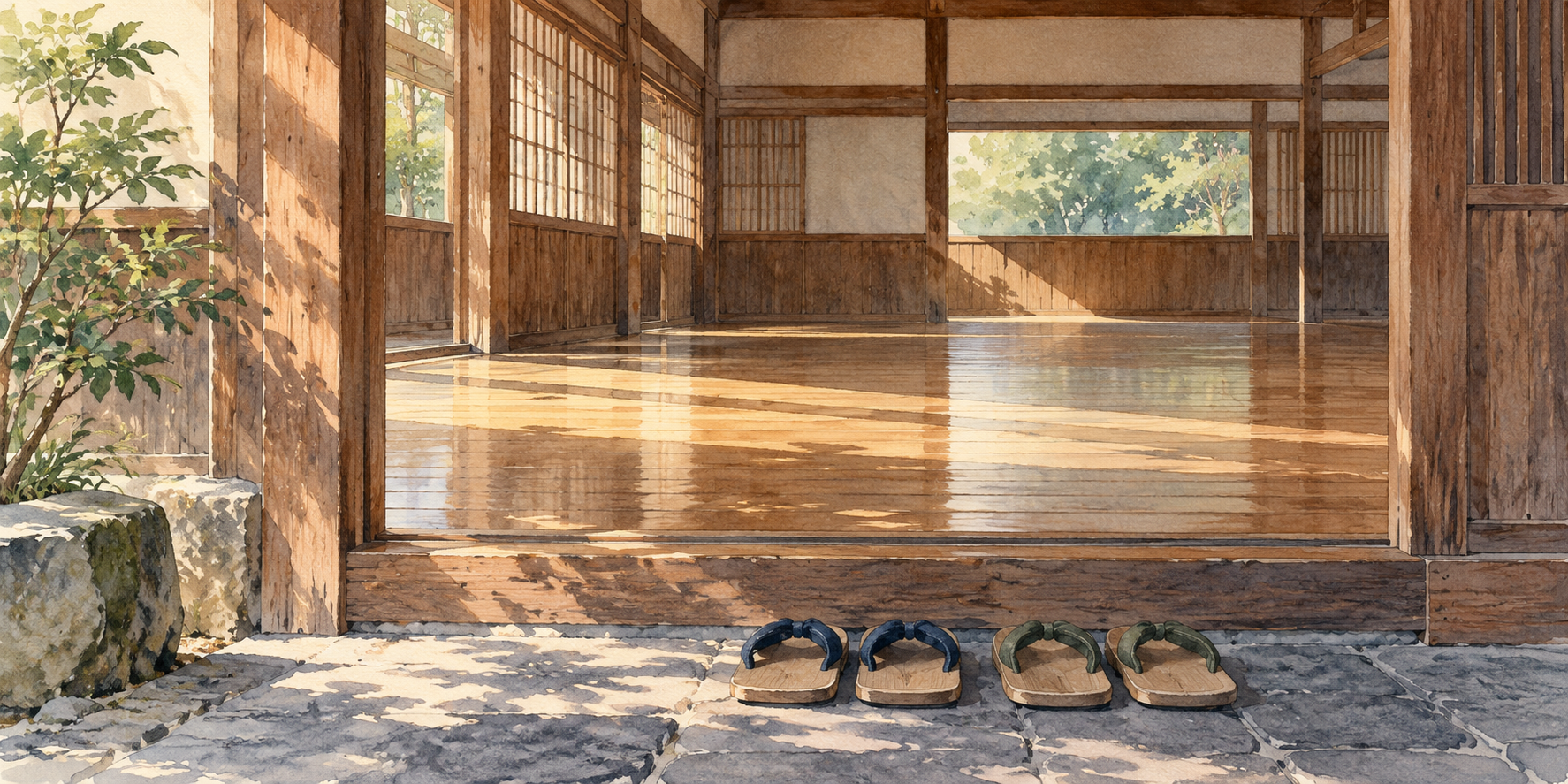
How would you explain why people bow in a dojo? Before answering simply that it is the rule, it is worth asking whom or what that action acknowledges.
The rei-courtesy expressed through conduct-that Ueoka learned from his teacher involved respecting the place, respecting others, and regulating his own behavior. With experience, he reconsidered meanings he could not fully express as a child. Sometimes a form is learned before its significance becomes clear.
Learning rei also means considering how we share a place of practice with others. When visiting an unfamiliar dojo, asking the instructor about a custom we do not understand can itself express respect. The manuscript includes memories of bowing toward a shrine within the dojo. These describe the author's own learning experience; they do not establish one set of customs for every dojo or one faith for everyone who practices kyudo. We can learn the background while attending both to the specific form and to its intention of treating others with care.
道場で礼をする理由を尋ねられたら、何と答えるでしょうか。決まっているから、とだけ説明する前に、その形が誰に、何に向けられているのかを考える余地があります。
本書で著者が師から受け取った礼は、場を敬い、相手を敬い、自分の振る舞いを整える学びでした。子どもの頃には十分に言葉にできなかった意味を、経験を重ねてから捉え直しています。先に形を学び、後から意味が深まることもあるのです。
礼を知ることは、他者と同じ場所で稽古する自分の立ち方を知ることにつながります。初めて訪れる道場では、分からない作法をその場の指導者に尋ねることも、敬意の表し方の一つでしょう。本文には神棚などへの礼の回想もありますが、それは著者が学んだ経験です。すべての道場の作法や、弓道を学ぶ人の信仰を一つに定める説明ではありません。背景を確かめつつ、相手を大切にする意図と具体的な形の両方を学んでいきます。
Source: 出典:Chapter 2, “Beginning and Ending with Rei”; manuscript pp. 21-22.第二章「礼に始まり、礼に終わる」/原稿21–22頁
About the source & images出典と画像について
These are editorial drafts based on the manuscript, for author review. They have not yet been checked against the final published edition. Page references are manuscript pages, not published-edition pages. The English text translates these editorial columns; it is not quoted from an English edition. English section titles are translations for reference, not verified official titles.原稿ベースの著者確認用編集稿です。刊行最終版との照合は未完了です。出典頁は61頁原稿の頁番号で、刊行版の頁番号ではありません。英語はこの編集コラムの翻訳であり、英語版書籍からの引用ではありません。英語の章節名は参照用の訳で、正式英語題として確認したものではありません。
Third-person editorial explanation, not first-person author testimony. Technical passages are not unsupervised practice instructions. No performance guarantees. Religious material reflects the author’s personal interpretation, not a participation requirement. Article 30 applies the manuscript to camp follow-up as an editorial proposal; the book does not describe a camp. First-time day experiences and camps for experienced overseas practitioners remain distinct.第三者による編集解説で、著者本人の一人称の証言としては書いていません。技術記事は単独練習の手順書ではなく、成果を保証しません。宗教的記述は著者個人の解釈で、参加条件ではありません。30番の合宿後への適用は書籍外の編集提案です。初心者の日帰り体験と海外経験者向け合宿を区別します。
Photographs are owner-supplied. AI illustrations are fictional contextual images, not documentary photographs or technical diagrams.写真は本人提供。AI生成イラストは架空の情景で、記録写真や技術図ではありません。